Partial digestion
Gluten fragments remain immunologically relevant after digestion and reach the mucosal environment.
Next-generation coeliac disease research
Glutopia Pharmaceuticals is developing transglutex, a fictional 100 mg oral small-molecule concept designed to engage the GTP-binding pocket of tissue transglutaminase 2 while using an enteric-coated OROS osmotic pump to support gut-restricted delivery.
Mission statement
Our mission is to develop innovative, locally acting small molecules that reduce the immunogenicity of gluten peptides while minimizing unnecessary interference with TG2’s normal physiological roles.
With transglutex, we combine an allosteric TG2 concept with a delayed extended-release OROS formulation, helping the product narrative stay focused on local intestinal delivery.
The science
Normally, gluten proteins are only partially digested in the intestine. TG2 can deamidate these gluten fragments, making them bind more strongly to HLA-DQ2 or HLA-DQ8 on antigen-presenting cells. This stronger binding can activate gluten-specific CD4+ T cells, stimulate B-cell antibody responses, and contribute to intestinal damage.
Gluten fragments remain immunologically relevant after digestion and reach the mucosal environment.
TG2 chemically modifies gliadin/gluten peptides, which can increase their binding to HLA molecules.
Antigen-presenting cells present the modified fragments to gluten-specific CD4+ T cells.
T-cell activation strengthens the autoimmune response and can contribute to intestinal injury.
Transglutex concept
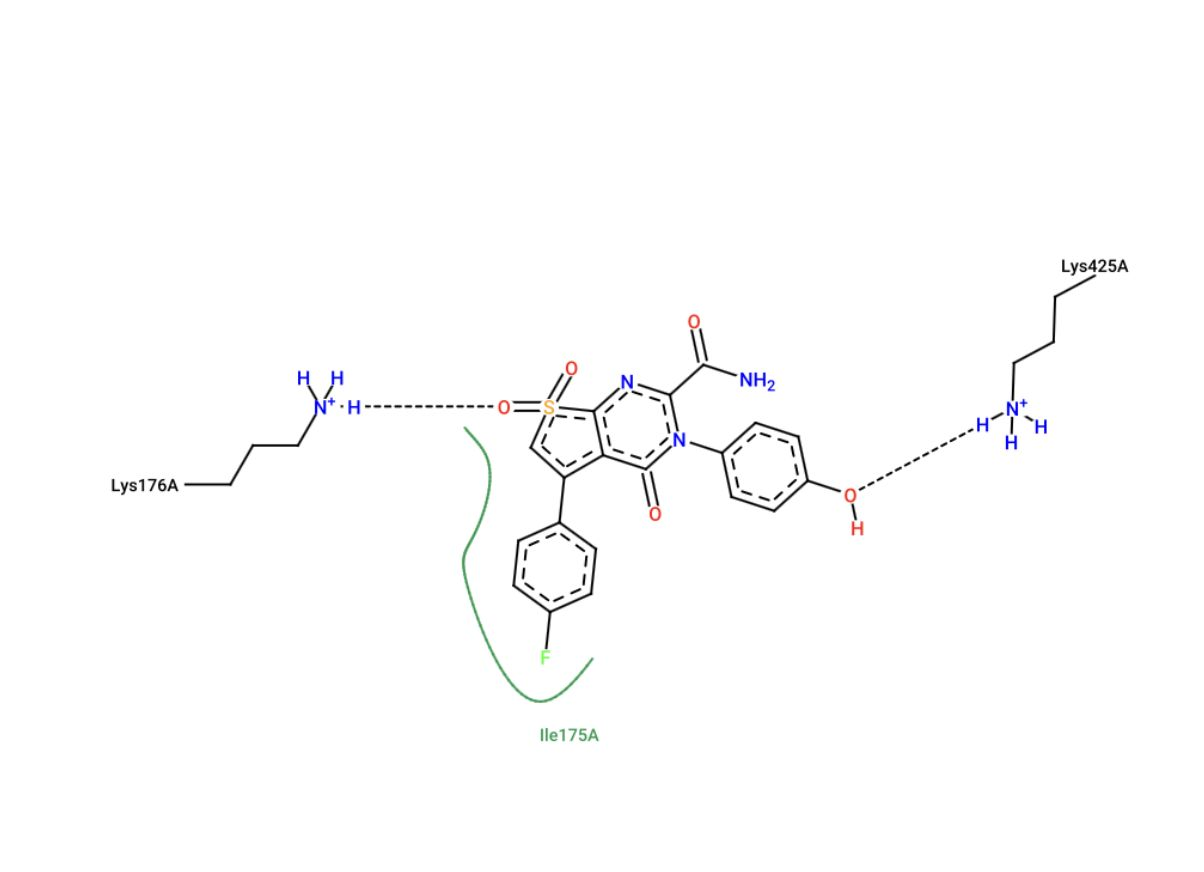
ZED1227 supports TG2 as a therapeutic target, but active-site inhibition may raise selectivity and systemic off-target concerns because TG2 is expressed across the body and has physiological roles such as wound healing and tissue remodeling. Transglutex therefore explores a different idea: allosteric stabilization through the GTP-binding pocket.
If TG2 is stabilized in its inactive GTP-bound-like conformation, gluten peptides may become less immunogenic, weakening T-cell activation and the downstream autoimmune response.
Supporting evidence
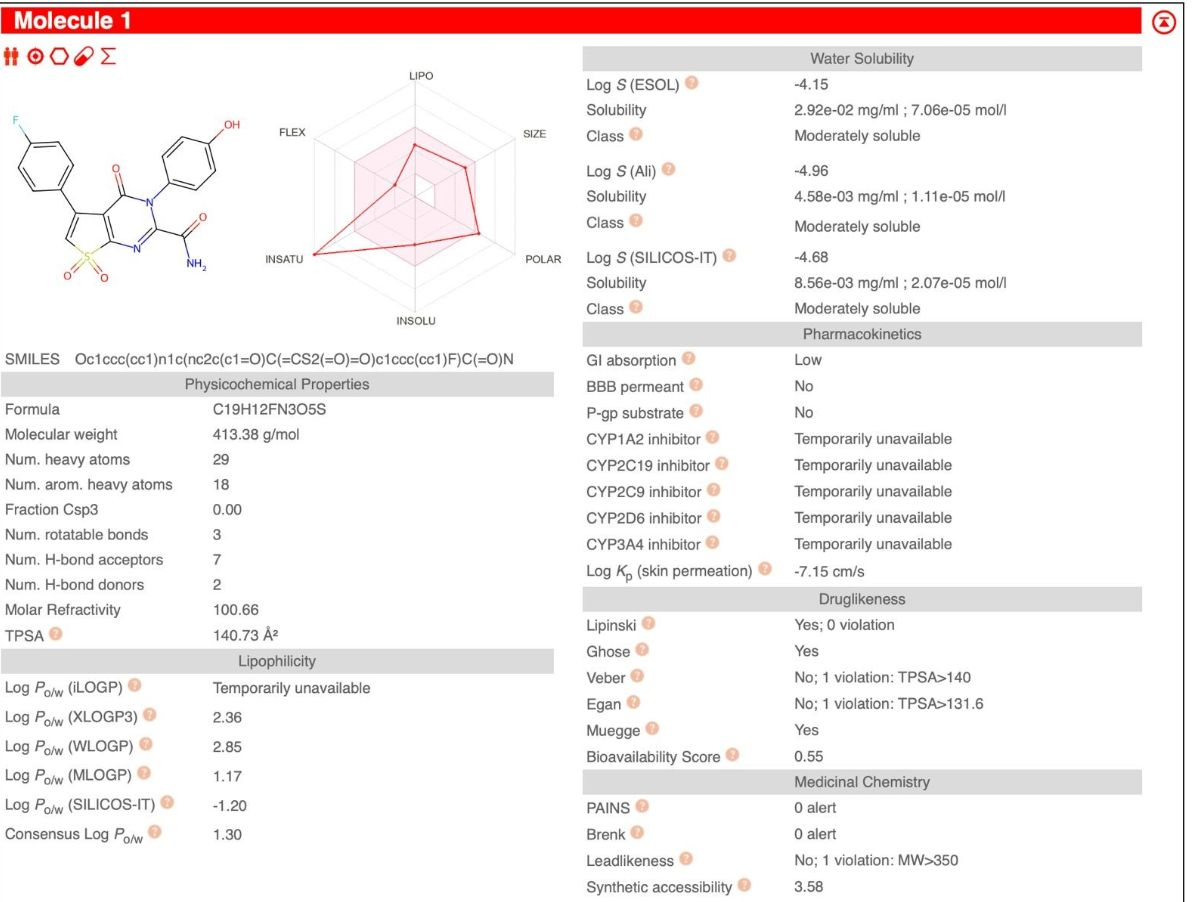
We use the PoseView binding figure and the SwissADME output as supporting evidence for the concept story. Switch between both views and click the hotspots for the key findings.
Formulation design
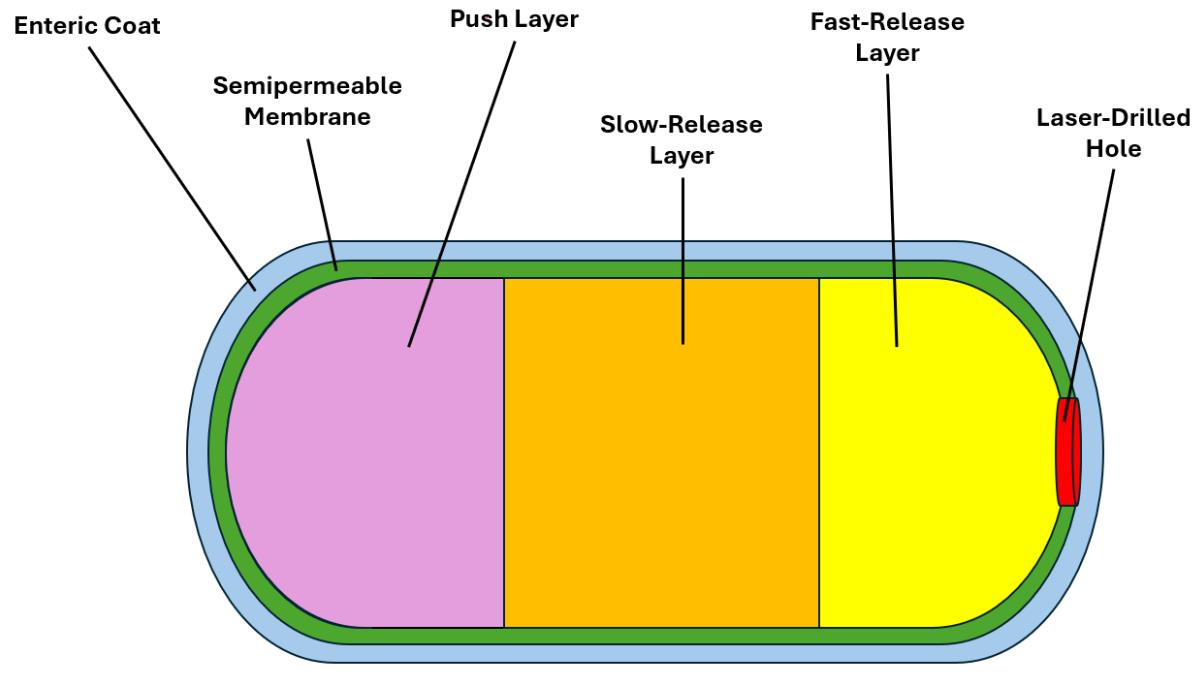
The schematic below is the reference look for the product. Next to it, you can explore an interactive cutaway that explains how each layer contributes to gut-restricted and controlled release.
Interactive product cutaway
Click or tap the numbered hotspots to highlight each layer and read what it does.
Core tablet
The core uses the same excipients in the push, slow-release, and fast-release regions, while the concentrations differ between sections to control ejection speed.
Semipermeable membrane
Cellulose acetate forms the defining semipermeable membrane of the OROS system. Water can enter, osmotic pressure builds, and TEC keeps the film flexible under pressure.
Enteric coat
Eudragit L30D-55 is used as a pH-dependent coat to prevent release in the stomach while dissolving at small-intestinal pH. TEC supports flexibility and titanium dioxide provides the white appearance.
The active pharmaceutical ingredient is transglutex, each tablet contains 100 mg of transglutex. The excipients and other additives in this medicine are; Microcrystalline cellulose (E460i), Mannitol (E421), Polyethylene oxide (E1521), Hydroxypropyl cellulose (E463), Colloidal silicon dioxide (E551), Magnesium stearate (E470b), Talc (E553b), Cellulose acetate, Triethyl citrate (E1505), Eudragit L30D-55, Titanium dioxide (E171).
Excipients and other additives: Microcrystalline cellulose (E460i), Mannitol (E421), Polyethylene oxide (E1521), Hydroxypropyl cellulose (E463), Colloidal silicon dioxide (E551), Magnesium stearate (E470b), Talc (E553b), Cellulose acetate, Triethyl citrate (E1505), Eudragit L30D-55, Titanium dioxide (E171).
Investor thesis
The fictional investment case for Glutopia combines a differentiated allosteric TG2 mechanism, a gut-restriction strategy, and a dosage-form narrative that supports local delivery and controlled release.